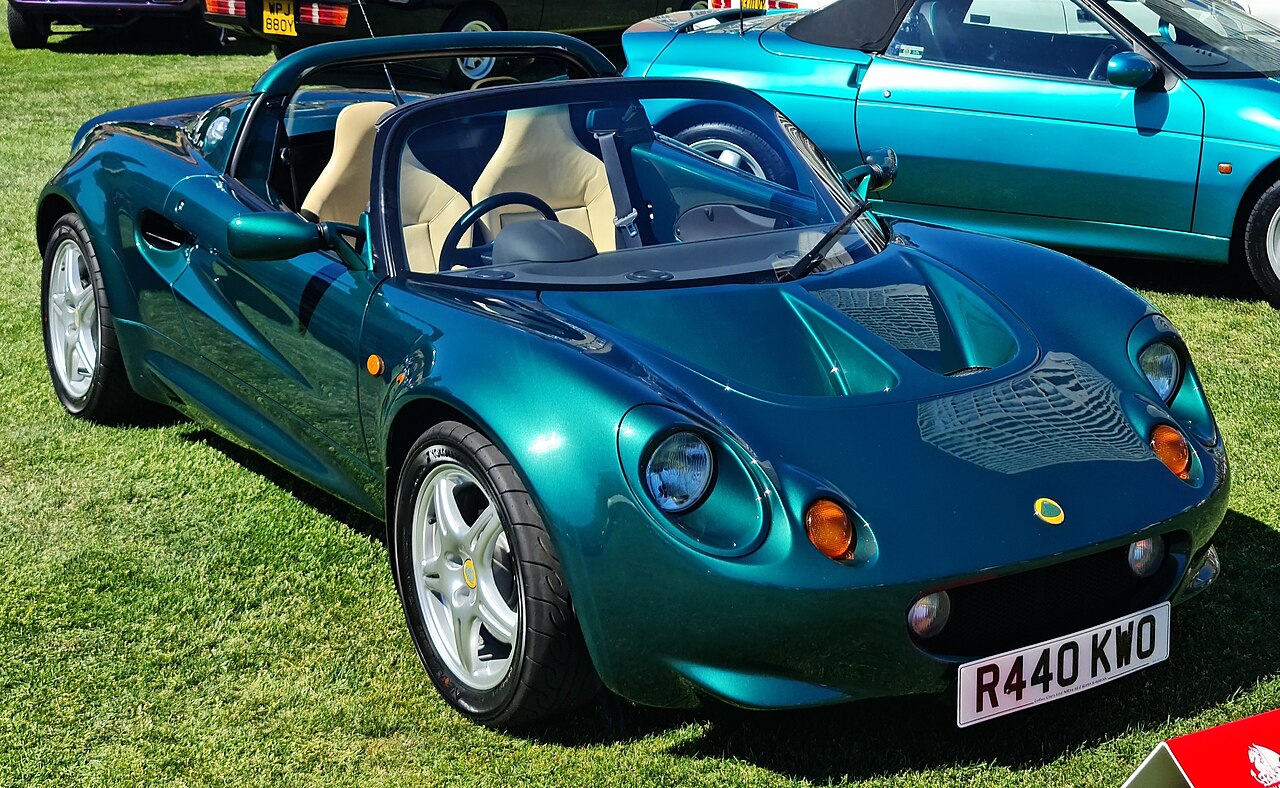
Lotus Elise (S1)
725 kg —— 挤压铝型材粘接底盘,整个车架只有 68 kg
- Peak power
- 120 PS
- Peak torque
- 165 N·m
- Kerb weight
- 725 kg
- 0–100 km/h
- 5.9 s
- Top speed
- 200 km/h
- Weight-to-power
- 6.04 kg/PS
This article is only available in Chinese for now. The interface is translated; the prose is still on the way.
Elise 是 Colin Chapman "Simplify, then add lightness"(先简化,再加轻)这条信条最成功的现代实践。
挤压铝粘接底盘是它的核心技术:底盘由挤压成型的铝合金型材用环氧结构胶粘接而成,几乎不用焊接和铆接。
好处:
- 极轻:整个底盘只有 68 kg,而抗扭刚度达到 10000 N·m/度(远超同期的钢制跑车)
- 粘接比焊接的疲劳强度更好(焊接会在热影响区产生应力集中)
- 生产不需要昂贵的冲压模具,适合小批量
代价:碰撞后几乎无法修复(必须整体更换)、粘接工艺对温度和洁净度要求极高。
725 kg 意味着什么:120 马力在今天听起来可笑,但功率重量比是 6.0 kg/PS —— 与同期的宝马 M3(1440 kg / 321 PS = 4.5)不算差太远,而 Elise 的操控极限、转向反馈和乐趣远超之。
MMC 制动盘(金属基复合材料,铝合金基体中加入碳化硅颗粒):比铸铁盘轻 50%,且是簧下和旋转质量。但它在高温下磨损快,Lotus 在后期改回了铸铁。
无助力转向和无助力刹车:因为车太轻,根本不需要。这也让转向反馈成为量产车中最好的之一。
Powertrain
| Layout | MR |
|---|---|
| Drive | RWD |
| Internal code | Rover K-Series 1.8L |
| Cylinder configuration | 直列四缸 |
| Displacement | 1796 cc |
| Aspiration | 自然吸气 |
| Peak power | 120 PS |
| Peak power | 88 kW |
| Peak torque | 165 N·m |
| Power at | 5500 rpm |
| Torque at | 3000 rpm |
| Redline | 7000 rpm |
| Gearbox | 5速 手动 |
| Differential | 开放式差速器 |
Chassis and suspension
| Body structure | 挤压铝型材 + 环氧树脂粘接底盘(extruded bonded aluminium)—— 整个底盘仅 68 kg;玻璃钢车身覆盖件 |
|---|---|
| Kerb weight | 725 kg |
| Weight distribution | 39:61 |
| Front suspension | 双叉臂,锻造铝 |
| Rear suspension | 双叉臂,锻造铝 |
| Dampers | Bilstein 单筒 |
| Anti-roll bars | 前防倾杆(后期无后防倾杆) |
| Steering | **齿轮齿条,无助力** |
| Front brakes | **282mm 铝基复合材料(MMC)制动盘 —— 无助力、无 ABS** |
| Rear brakes | 282mm MMC |
| Front tyres | 185/55 R15 |
| Rear tyres | 205/50 R16 |
| Aerodynamics | 前分流板 + 车底扩散器 |
Performance
| 0–100 km/h | 5.9 s |
|---|---|
| Top speed | 200 km/h |
| Weight-to-power | 6.04 kg/PS |
Lineage
Derivatives Lotus Emira V6
Family Lotus 轻量化谱系